
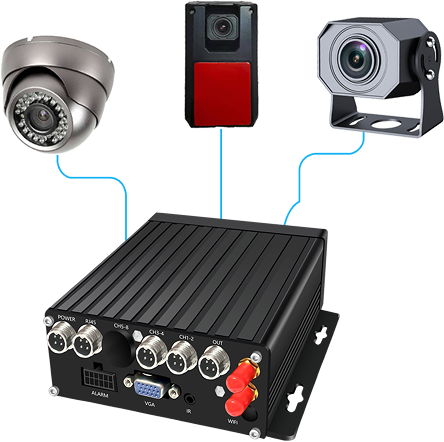
Every fleet manager hopes never to need crash footage, but a recorder’s value is proven in that moment. After a serious incident, two questions decide whether the footage helps: did the clip survive, and can someone find it quickly? A vehicle hybrid video recorder answers both by handling storage in layers rather than dumping everything onto one card. Transport regulators take survivable recording so seriously that they certify crash-hardened memory for trains under federal criteria.
Layer One: Continuous Onboard Recording
Start with the everyday layer. A vehicle hybrid video recorder records all of its channels continuously to onboard storage, usually a high-endurance SD card or an SSD built for vibration and rough roads. When the storage fills, the oldest routine footage is overwritten in a loop, so the recorder always holds the most recent driving footage. A mobile DVR system sized to the fleet decides how many days of continuous video stay available before that loop comes around.
It might seem easier to fit one huge card and be done. In practice, a single storage pool creates a single point of failure, and it does nothing to speed up retrieval. A thoughtful network video recorder (NVR) plan spreads the work, so no one part has to do everything. That’s why serious fleets treat storage as a layered system rather than a bigger box.
Layer Two: Getting Critical Clips Off Fast
The second layer drives retrieval speed. Instead of waiting to pull a card, the recorder marks event clips from a hard brake, an ADAS alert, or a panic button and sends those flagged clips over 4G to the fleet platform. A manager opens the clip from the office minutes later. This is the practical heart of a vehicle black box DVR: routine video waits on the card, while important moments travel ahead so they are ready when someone asks.
Layer Three: Storage That Survives the Worst
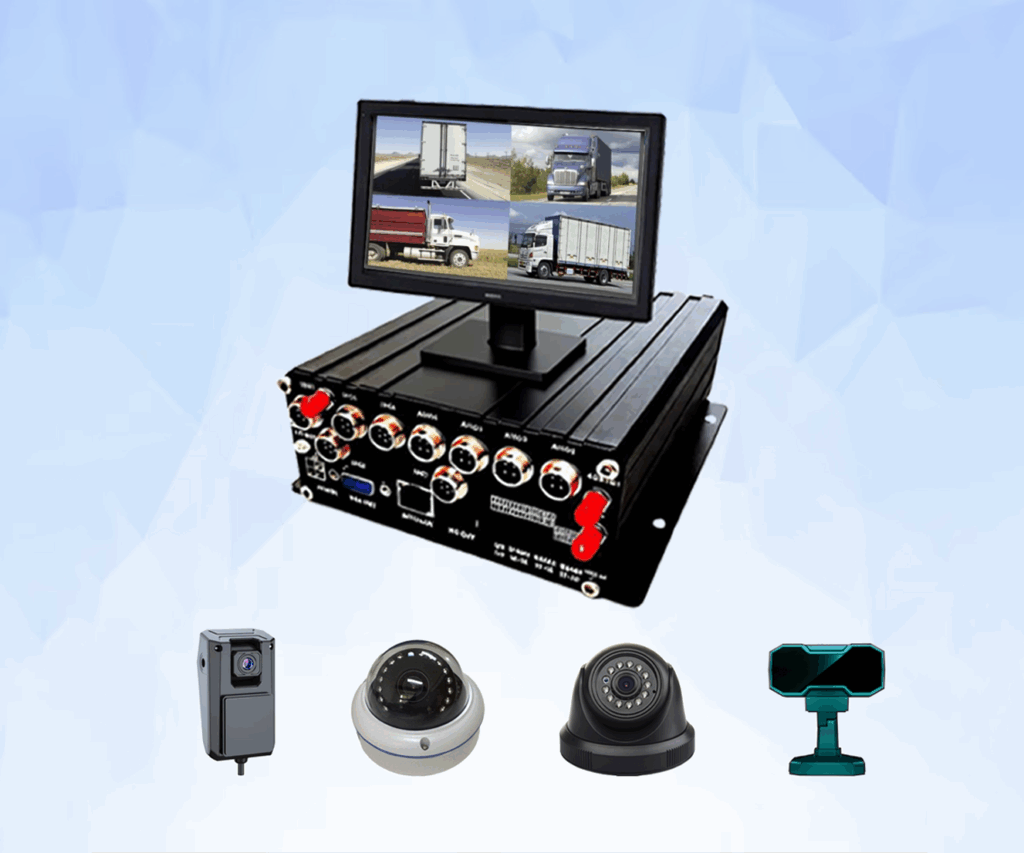
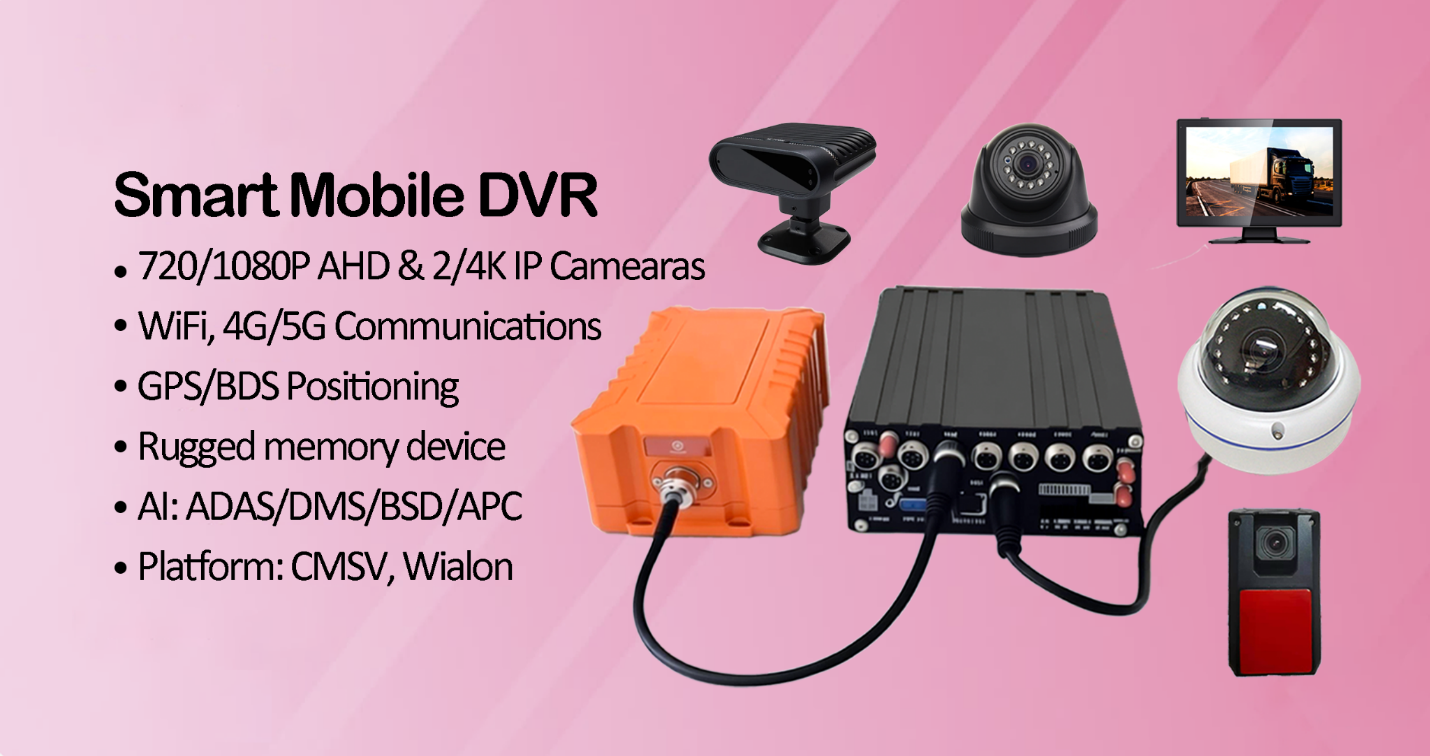
The third layer protects the footage that must never be lost. MacFaith Co., Ltd.’s rugged memory device is built for this job, withstanding temperatures up to 1,100 degrees Celsius, severe crashes, and water immersion. For trains, dangerous-goods vehicles, and other high-risk work, that module acts as a true black box. Regulators require image recordings on trains to be stored in crash-hardened memory, as federal rules spell out, which is exactly the role Rugged Memory Devices play alongside the recorder.
How the Layers Improve Performance
Layering storage this way improves real-world recording performance. Uploads never hold up continuous capture on the local card, because only the light copies and flagged clips travel over the network. Critical clips are copied to protected media, so a single damaged card doesn’t erase the evidence. Because flagged footage is already offloaded, retrieval doesn’t depend on physically reaching the vehicle. This rugged DVR design keeps recording, protection, and retrieval working together instead of trading one for another.
Sensible retention rules tie the layers together. Flagged event clips are locked so the loop cannot overwrite them, while routine footage cycles normally. That way, a week-old collision clip stays there even after ordinary driving has overwritten it many times. A commercial truck camera system setup that separates protected events from recyclable video gets long retention where it counts, without needing an enormous, costly card in every vehicle.
Picture an oil tanker or a mining haul truck. These vehicles run in punishing conditions, and an incident can involve fire or a heavy impact, both of which can destroy ordinary storage. A layered vehicle surveillance system keeps the working footage on the card, streams alarms to the office, and preserves the decisive clip on the rugged module. The push for crash-hardened recording grew directly out of accident investigations where data was lost to fire and water, as the rulemaking record describes.
Retrieval, Accessories, and Sizing
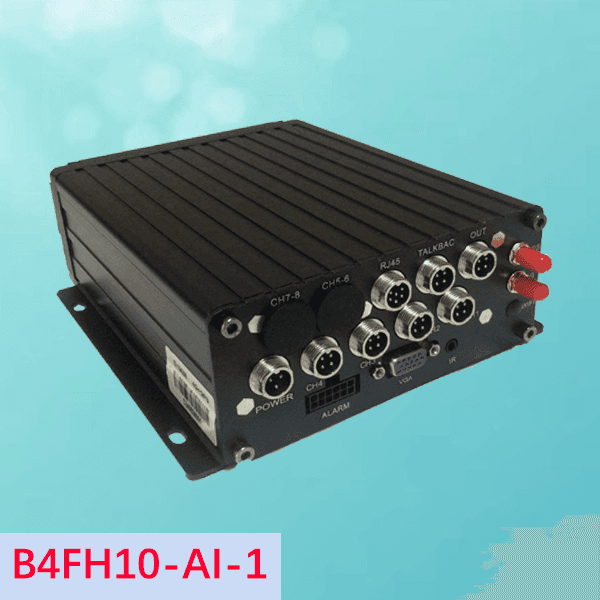
Retrieval should feel boring, in the best way. When a claim lands, the manager searches by time and GPS location, opens the already-uploaded clip, and exports it. There is no frantic hunt through a full card. A vehicle camera system with a DVR that sorts footage into everyday, flagged, and protected layers turns an afternoon of scrubbing into a few minutes of focused review.
Storage planning also depends on the right supporting parts. Choosing high-endurance cards, the right module, and clean power affects how long a recorder keeps footage and how well it survives. The right DVR accessories extend the life of a mobile DVR camera system and reduce dropouts, so the layers described here actually hold up over years of daily service rather than only on the day of installation.
Getting the base layer right takes a little planning. The number of cameras, recording quality, and required retention days determine how much onboard storage each vehicle needs. A vehicle black box DVR on a long-haul truck that must hold a week of footage needs more capacity than a short-shift shuttle. Matching the card to the route avoids both wasted money and the nasty surprise of a loop that overwrites footage sooner than expected.
Costs, Redundancy, and Regulation
The layered approach also helps with running costs. Uploading every second of every camera over 4G would burn through data plans quickly. By sending only the light live copies and the flagged clips, a mobile DVR system keeps mobile data use sensible while still getting the important footage off the vehicle fast. Fleets get quick access to what matters without paying to stream hours of empty road.
Some setups also add redundancy inside the vehicle. A recorder with two card slots can mirror the most important footage across both, so a single failed card does not end the story. Combined with the protected module, a vehicle surveillance system then has everyday capture, an onboard backup, and a crash-hardened copy of the clips that truly count. Each layer covers a different way footage can be lost.
For regulated operators, the protected layer is not optional. Passenger transport and dangerous-goods carriers must often demonstrate that recordings were captured and preserved, and a commercial truck camera system setup that keeps a crash-hardened copy makes that easy. Handing an investigator a clean, intact clip is far better than explaining why the only copy sat on a card that didn’t survive.
Where MacFaith Co., Ltd. Fits In
At MacFaith Co., Ltd., layered storage is core to how we build. Based in China, we have manufactured and supplied vehicle monitoring systems since 2011, pairing our recorders with storage designed for road and rail. Our commercial vehicle DVRs manage analog and IP channels together, and our Rugged Memory Devices protect the footage that matters most when conditions turn extreme.
Not sure how much protection your fleet really needs? At MacFaith Co., Ltd., we plan storage around your routes and risks. We fit the car cameras and show you how each one records; we connect them to a DVR that captures every channel and preserves critical clips as one system; and we add DMS and ADAS cameras so the recorder supports safer driving as well as solid evidence. Tell us how your vehicles run and talk with our team about the right recorder and memory for the job.