
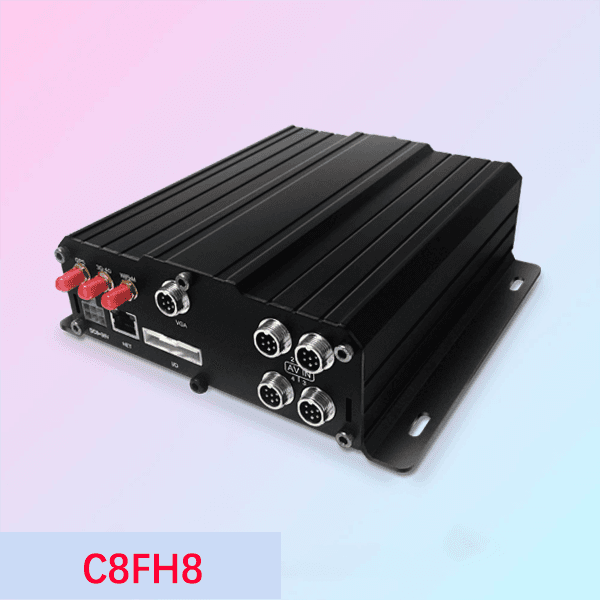
Vehicle video surveillance systems are essential tools for recording driving behavior, supporting safety analysis, and maintaining operational accountability. However, as these systems have become more advanced, they have also faced a persistent challenge: false alerts caused by irrelevant motion. Environmental changes, road vibrations, reflections, weather conditions, and background movement often trigger unnecessary recordings, reducing system efficiency and user trust. To overcome this limitation, modern vehicle DVR platforms now rely on smart motion algorithms to deliver more accurate and reliable detection.
These algorithms represent a shift from basic motion sensing toward intelligent event recognition. By interpreting motion within a driving context rather than reacting to simple visual changes, they significantly reduce false alerts while improving storage efficiency and alert precision. As vehicle surveillance continues to evolve, intelligent motion processing has become a core requirement rather than an optional enhancement.
The Complexity of Motion Detection in Vehicle Environments
Motion detection in a moving vehicle is fundamentally different from fixed-site CCTV surveillance. A stationary camera observes a relatively stable environment, whereas vehicle-mounted systems operate in continuously changing conditions. Traffic flow, road geometry, lighting transitions, and weather patterns can all change within seconds while the vehicle is in motion.
Traditional motion detection techniques rely on pixel variation between video frames. In a vehicle environment, this approach produces frequent false alerts. Passing shadows, headlight glare, roadside structures, or rain droplets may all be misinterpreted as meaningful motion. Over time, excessive alerts reduce confidence in the system and complicate data review processes.
By contrast, smart motion algorithms are designed to understand motion relevance rather than raw movement. They enable vehicle DVR systems to distinguish between background activity and events that truly matter for safety, monitoring, or incident analysis.
Intelligent Motion Recognition Through Context Analysis
Modern motion processing relies on artificial intelligence to interpret movement within a contextual framework. Instead of reacting to every detected change, the system evaluates motion using multiple parameters such as object size, trajectory, relative speed, and position within the video frame.
This contextual evaluation allows smart motion algorithms to identify motion patterns associated with real driving events while ignoring irrelevant visual disturbances. For example, roadside vegetation moving in the wind or sudden changes in brightness do not trigger alerts because they do not match predefined motion profiles linked to operational risk.
By focusing on relevance rather than sensitivity, intelligent motion recognition improves both accuracy and reliability across diverse driving conditions.
Centralized Processing Within the Mobile DVR Architecture
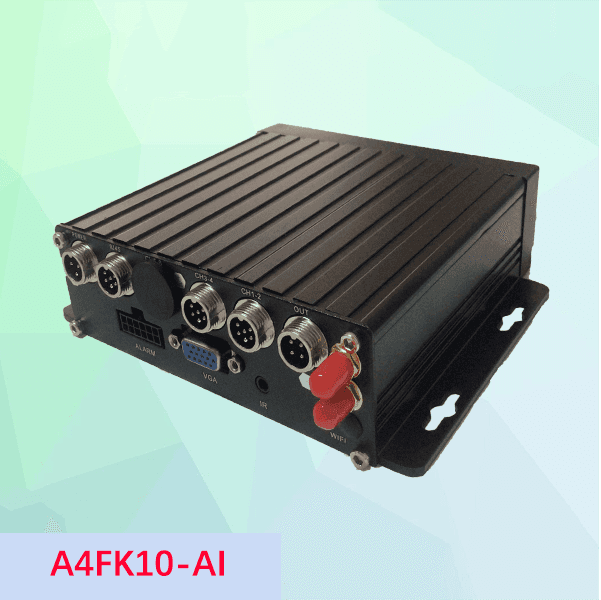
In vehicle surveillance systems, cameras do not operate independently. AI-enabled AHD cameras continuously capture video data and transmit it to the mobile DVR, which serves as the host device for system configuration and processing. All surveillance parameters, including motion detection thresholds, are set and managed within the DVR.
Motion analysis is performed at the system level, not at the camera level. This centralized approach allows smart motion algorithms to apply consistent logic across multiple camera inputs. By analyzing data streams together, the system avoids conflicting alerts and ensures unified decision-making.
Centralized processing also simplifies system maintenance and optimization, as detection rules can be updated or refined through the DVR without requiring hardware changes.
Reducing False Alerts Through Pattern Recognition
One of the most valuable benefits of intelligent motion processing is its ability to recognize patterns over time. Instead of treating each frame independently, the system evaluates motion continuity and consistency.
Smart motion algorithms assess whether detected movement follows a logical progression consistent with real-world driving behavior. Sudden, isolated changes that lack continuity are filtered out, while sustained, structured movement is prioritized for recording and alert generation.
This pattern-based approach significantly reduces false positives, ensuring that alerts correspond to events that require attention rather than random visual noise.
Supporting Assistive Driving Technologies
Accurate motion detection plays an important role in supporting driver-focused safety systems. Many assistive driving functions rely on clean, relevant visual data to operate effectively. If motion detection generates excessive noise, system performance and driver confidence can be compromised.
By filtering irrelevant movement, smart motion algorithms ensure that assistive software modules receive high-quality input data. This improves response accuracy and helps maintain a balanced flow of alerts that support, rather than distract, the driver.
In professional vehicle environments, this balance is critical for ensuring that monitoring technologies enhance safety without increasing cognitive load.
Storage Efficiency and Event-Based Recording
Vehicle DVR systems generate large volumes of video data while the vehicle is in motion. Without intelligent filtering, storage devices can quickly become saturated with redundant or low-value footage. This creates challenges for long-term data retention and post-incident review.
Smart motion processing enables event-based recording strategies. Instead of storing continuous footage indiscriminately, the system prioritizes recording when relevant motion conditions are met. Smart motion algorithms ensure that stored data reflects meaningful events rather than environmental noise.
This selective approach improves storage utilization, extends recording duration, and preserves critical footage for later analysis.
Multi-Camera Coordination and System Consistency
Modern vehicle surveillance solutions often incorporate multiple cameras to cover front, rear, side, and interior views. These cameras function as components of a unified system rather than isolated devices.
Smart motion algorithms coordinate motion detection across all connected camera channels. When an event occurs, the system can correlate movement across different viewpoints without generating duplicate alerts. This synchronized analysis supports accurate incident reconstruction and comprehensive situational awareness.
Multi-camera coordination also improves system scalability, allowing additional cameras to be integrated without compromising detection accuracy.
Enhancing Reliability in Challenging Visual Conditions
Vehicle surveillance systems must operate reliably under a wide range of visual conditions, including low light, glare, and rapid brightness transitions. These conditions often lead to false alerts in basic motion detection systems.
Intelligent motion processing compensates for these challenges by focusing on movement characteristics rather than raw visual changes. Smart motion algorithms maintain detection stability even when lighting conditions fluctuate, improving consistency in both urban and highway environments.
This reliability is especially important for systems designed to support safety monitoring and incident documentation.
Operational Impact of Reduced False Alerts
False alerts do more than waste storage resources—they reduce system credibility. When operators or drivers encounter frequent irrelevant notifications, they may begin to ignore alerts altogether. This undermines the purpose of surveillance and safety monitoring systems.
By minimizing unnecessary alerts, smart motion algorithms help maintain trust in the system. Alerts become meaningful signals rather than background noise, ensuring timely response and effective decision-making.
For professional vehicle surveillance applications, this reliability translates directly into improved operational efficiency and safety outcomes.
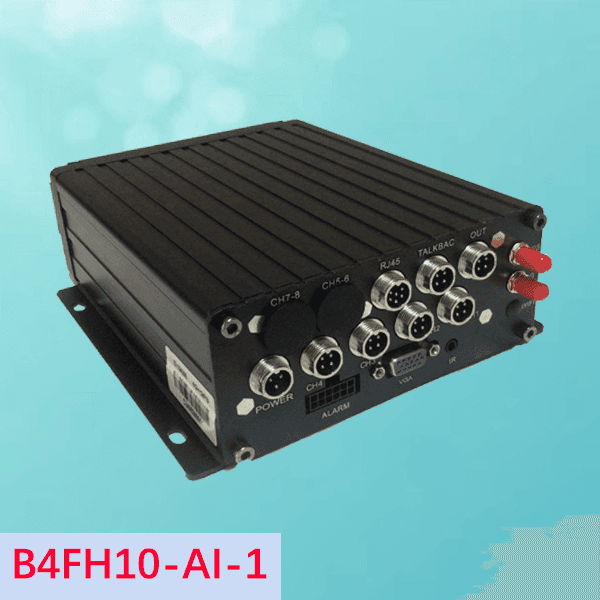
At MacFaith Co., Ltd., we manufacture and supply intelligent vehicle surveillance solutions built around smart motion algorithms. We integrate mobile DVR systems with advanced driver assistance systems and rugged memory devices. Our solutions are engineered for accuracy, stability, and safety, helping vehicle solution agencies deploy scalable monitoring systems that enhance driver awareness, reduce false alerts, and improve operational confidence on the road. We also offer hybrid mobile DVRs.
Contact us for more information.